
From Tunbridge’s Covered Bridges to Royalton’s Steel Trusses, Vermont’s Historic Crossings Tell Stories of Ingenuity, Preservation, Change
November is Historic Bridge Awareness Month, an opportunity to appreciate the bridges that have connected Vermont communities for generations and consider what it will take to preserve them for the future.
The observance was established unofficially in 2006 by HistoricBridges.org to encourage public awareness of historic bridges and the importance of preserving them. November was chosen partly to commemorate a bridge lost to demolition and to reflect on historic structures lost during the preceding construction season.
In the White River Valley, residents don’t have to travel far to find examples of this engineering heritage. Tunbridge alone has five historic covered bridges: the Howe, Cilley, Mill, Flint, and Larkin bridges. Nearby Chelsea has the Moxley Covered Bridge, while the Randolph area has three more: the Kingsbury, Gifford, and Johnson bridges, the last also known as the Braley Bridge.
Phill Gatenby, a member of the Vermont Covered Bridge Society, has visited and documented all 100 of Vermont’s covered bridges for his YouTube series, Vermont’s 100 Covered Bridges.
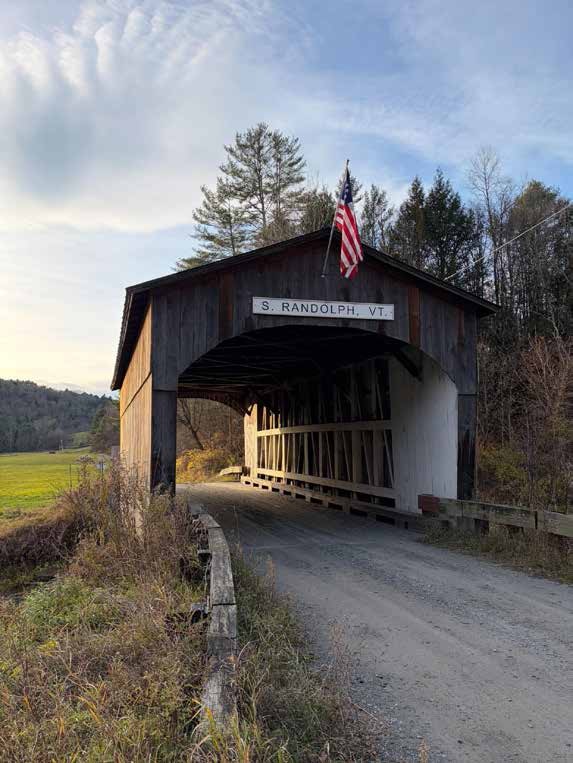
“There used to be 600 covered bridges at any one point in Vermont. Today we have 100,” Gatenby said.
Originally from Manchester, England, Gatenby developed his fascination with covered bridges after moving to Vermont and discovering structures unlike anything he had previously encountered.
His curiosity grew into an ambitious project to research and film the state’s covered bridges, documenting their histories, construction and surroundings. He began filming in September 2024 and completed the filming in June 2026. The episodes are being released weekly on YouTube.
“I’ve finished. I did them all. I’ve done all 100,” he said.
Gatenby’s work recently earned him the Vermont Covered Bridge Society’s Member of the Year award, presented at the organization’s fall meeting in Tunbridge.
The society was founded in 2001 following efforts to save the Cambridge covered bridge in Cambridge Junction. Its mission grew from that preservation effort into a broader commitment to protecting Vermont’s remaining covered bridges.
But preserving these landmarks is not always straightforward.
JB McCarthy, a project manager in the Vermont Agency of Transportation’s structures section who chairs the agency’s covered bridge committee, said covered bridges occupy a special place in Vermont’s transportation history.
McCarthy said Vermont places a high priority on preserving its historic covered bridges, generally favoring rehabilitation over replacement while maintaining their original appearance and character.
Unlike modern bridges, many historic covered bridges were constructed for horse-drawn vehicles and much lighter traffic. Today’s heavier trucks, changing transportation needs, and decades of exposure to the elements present significant challenges.
John Dumville of South Royalton, Vermont’s retired historic-site operations chief and state historian, said a bridge’s historical importance goes beyond its age. Unusual designs, distinctive engineering and rare construction methods can make a bridge historically significant.
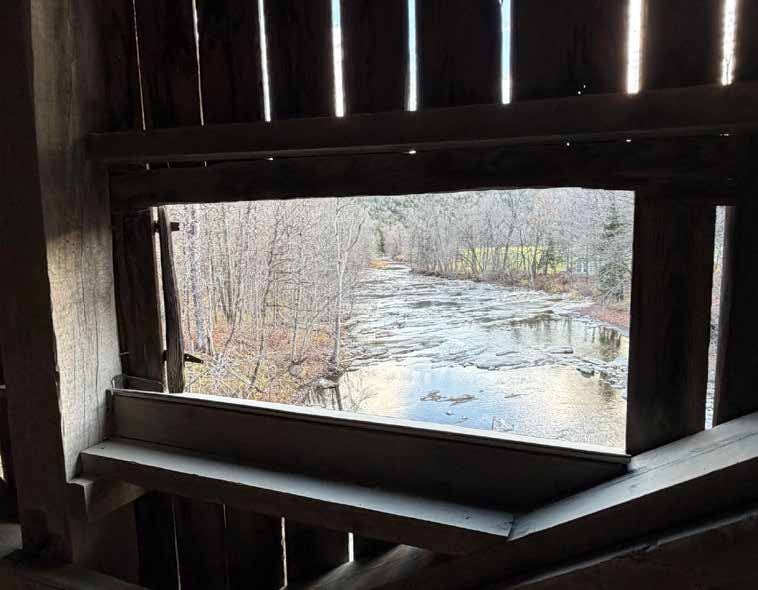
He pointed to the importance of routine maintenance, including cleaning debris from bridge pockets each spring. Road salt, corrosion and deferred maintenance can gradually undermine historic structures, while increasing traffic and heavier vehicles add to the strain.
Gatenby identified another major danger.
“It’s the weather, storms.”
He cited Vermont’s devastating 1927 flood and Tropical Storm Irene as examples of the destruction that severe weather can inflict on historic covered bridges.
Preservation sometimes requires compromises. Gatenby explained that steel I-beams have been installed beneath some wooden covered bridges to support their weight and prolong their useful lives.
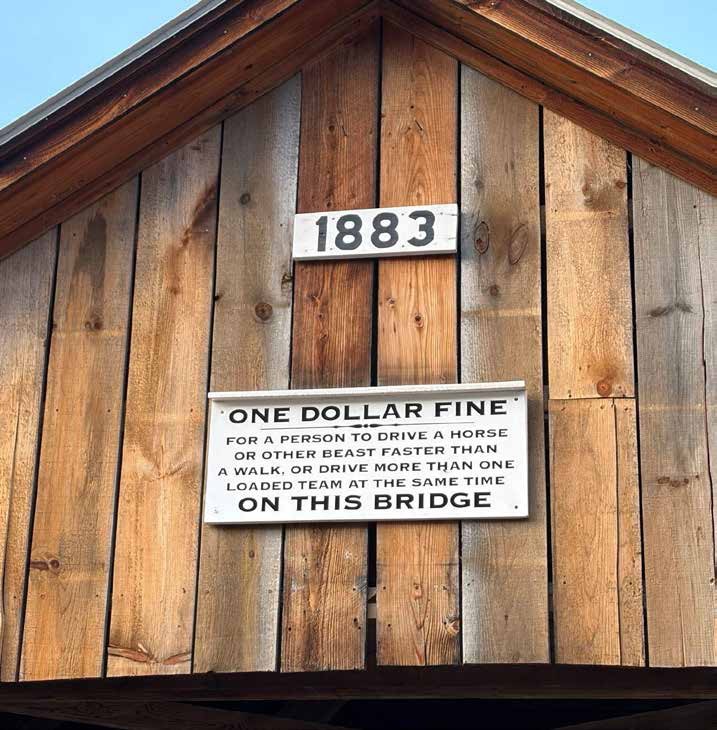
McCarthy said the state generally prefers repairs using traditional materials and construction methods because steel supports can alter a bridge’s historic structural character. Such reinforcement may help save a bridge, but preservation specialists generally consider it a less desirable alternative to maintaining the original timber structure.
The choices become especially difficult when a historic bridge can no longer accommodate the needs of its community.
Preservation And Practicality
In Stockbridge, the Gaysville steel truss bridge, constructed in 1929 following the 1927 flood, has been the subject of years of discussion involving the town, VTrans and historic preservation officials.
McCarthy said the bridge’s narrow, single-lane design and weight restrictions have made it unsuitable for some emergency vehicles, town maintenance equipment and logging operations. Although preservation officials sought to retain the structure, the town favored replacement.
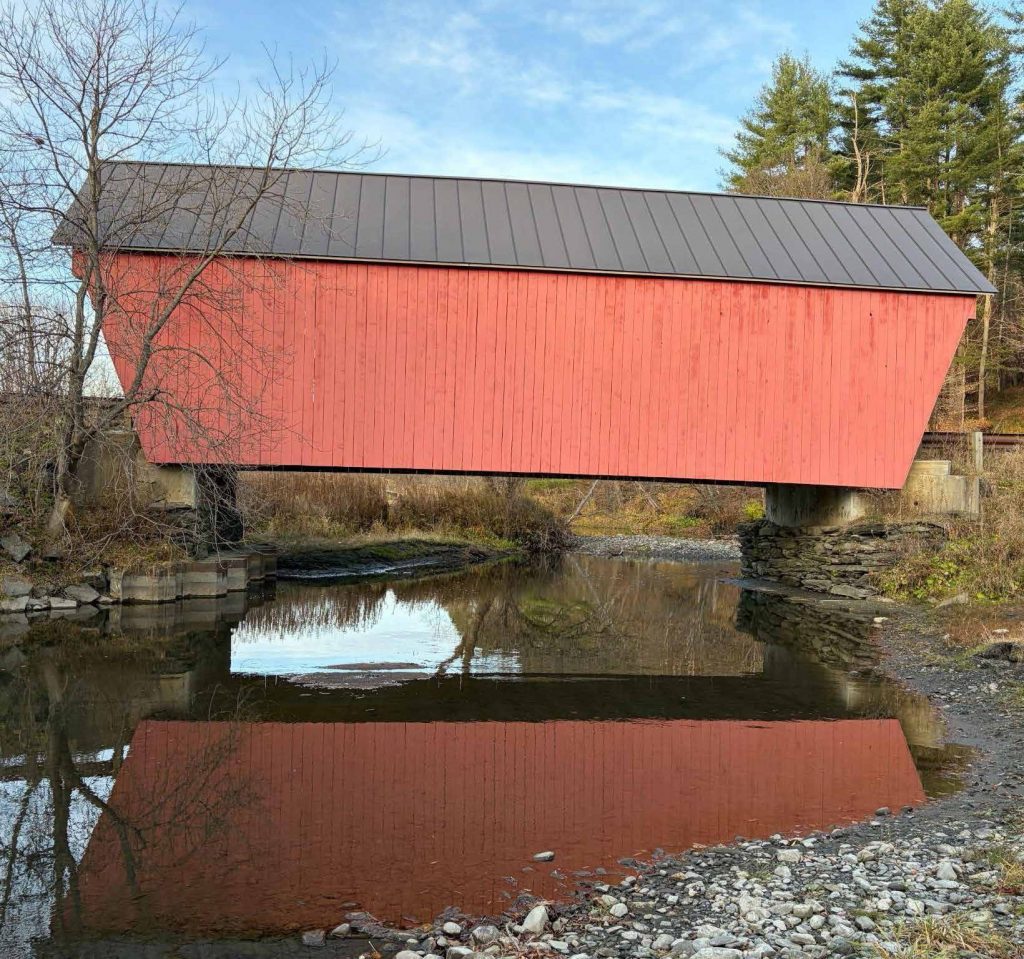
After approximately five years of project development and discussions, VTrans moved forward with plans for a new bridge.
Other White River Valley communities face similar decisions, with different outcomes.
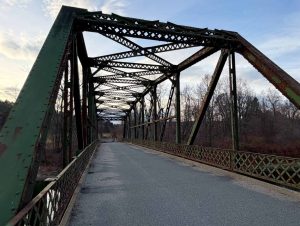
Dumville said the Foxstand Bridge is slated for replacement, while the Royalton Village steel truss bridge has been rehabilitated. According to VTrans project information, the Royalton bridge was built in 1928, has a 165-foot span and was previously rehabilitated in 2007.
Brookfield’s Floating Bridge offers another example of how a historic structure can survive through changes to its original components. Its pontoons have been replaced multiple times (most recently in 2015, when it was completely rebuilt), but Dumville said the bridge retains its historical identity through the preservation of its distinctive design concept.
Funding also plays an important role in determining which bridges survive.
McCarthy said the state has been working to direct preservation resources toward historic bridges before deterioration becomes too extensive.
McCarthy emphasized the importance of addressing deterioration early, explaining that once a historic bridge deteriorates beyond a certain point, rehabilitation may no longer be feasible, leaving replacement as the only practical option.
For communities, the cost of maintenance and rehabilitation must be weighed against the expense of replacement, as well as public safety and the demands of modern transportation.
Historic Bridge Awareness Month offers an opportunity to consider those choices before another construction season begins.
For residents of the White River Valley, the region’s covered bridges, steel trusses and unusual floating bridge are more than ways to cross rivers and streams. They are reminders of earlier generations’ engineering skills, the changing needs of Vermont communities and the ongoing work required to keep historic landmarks standing.
Our thanks to The White River Valley Herald for permission to reprint this article.